

Skills are important insofar as the individual wielding the skillset has the competency to apply those skills effectively in a manner that brings value to an organization. Skills alone do not make you a great candidate in today’s job market even though 2024 told you otherwise. How you have applied those skills and how you’re able to communicate their value as a cohesive brand speaks louder than the skills themselves to get the job you desire with the pay you deserve.
Skills-Based Hiring: A Narrow Approach
In 2024, there was a mad-dash towards skills-based hiring, coupled with AI prompted job descriptions that left companies struggling to hire and skyrocketing unemployment rates. Human Resource (HR) trends spoke of the value of skills-based hiring over traditional methodologies in order to hire pre-qualified individuals for the roles and create more career progression clarity for HR teams managing these resources. But the proof is not in this pudding! Between 2024-2025, leaders have been complaining of the difficulties of hiring due to candidates’ resumes not appropriately being captured by recruiting parameters, AI recruiting bots, and a true understanding of what a role entails.
Employers are increasingly understanding that most role require quality within soft skills like teamwork, communication, and leadership before hard skills. An individual with hard skills like coding can of course be of value for a developer role, but if they are not strong on the aforementioned three soft skills they will struggle to develop quality code that aligns with company expectations. Absurd? Not really. Development is not just about being able to write code well, it’s also about understanding the end customer experience and how to align code with that context. Therefore, a resume with an engineering or computer science degree may qualify, but an individual with proven communication of the application of those degrees and a personal brand that communicates this understanding is far more valuable to any company. What value is your ability to code if you cannot explain it’s value to the company or the consumer in practice or even an interview?
Brand-Based Hiring: 360° of Quality
Creating and communicating a personal brand that expresses the value of your overall skillset is far more valuable (and successful) in the job search process than presenting your skills alone. A personal brand incorporates hard skills with the finesse of soft skills to effectively present the overall package a company is investing in by hiring an individual. When evaluating job candidates, 80% of recruiters consider personal branding important. In fact, personal branding has increased in value over the years with 70% of employers now stating that a personal brand is more important than a resume or CV. Companies are not only looking for someone that can do the job, but someone who aligns with their values and represents the company while doing the job well. This stems from companies learning that their employees are their biggest customers and their biggest marketing asset since 84% of consumers believe a company’s brand is influenced by the personal brands of its employees. As social media has further propagated the value of a personal brand, employers are more likely to hire someone with a complete LinkedIn profile – 40x more likely!
Compare your personal brand to a product: you don’t buy a product purely for the features, you validate it’s quality by observing the benefits and overall branding. If you have two products identical in functionality on the shelf but one has packaging that is falling apart and the other has enticing packaging that shows the effectiveness of the product in it’s design, which one will you choose? Of course the enticing product that is showing it’s effectiveness from the moment your eyes landed on it. The branding convinces you that it’s a quality product before you’ve even checked the list of features, and then the features further supplement your first impression. Similarly, your personal branding should qualify you for the role in the first impression and your skills should supplement that impression with certified validation. You have to communicate the quality of your value as a whole individual from the first touchpoint in the application process to prove your worth from every angle – all 360° of it!
3 Steps to Personal Branding
Building a strong online presence – personally and professionally – can enhance your chances of getting the opportunities you desire by spreading awareness of your worth, increasing trust in your capabilities, and communicating the value you can add towards a company’s success. Here are 3 steps you MUST take to build your personal brand today:
1. Identify who YOU are and Your PURPOSE
Your personal brand is a reflection of YOU. You have to start by being authentically you and understanding what your purpose is. These are foundations of who YOU are and what you bring to any table. Use the link below to set up time to discover where you are today what your purpose is:
2. Understand Personal Branding
Learn personal branding and storytelling techniques to design your personal brand on top of the foundation of who you are and what your purpose is. Use these resources to get started:
3. Update Your Profiles
Update your LinkedIn and social profiles to present a cohesive brand across your online presence. Use these resources to guide this process:
Don’t just highlight your features (skills). Highlight the benefits (value) of YOU as the product.

Shocked? You should be. Everyone is using artificial intelligence (AI) as a dependency for their day-to-day activities, basic life questions, creative production, and business consultation. But has anyone really given a thought to the type of information they are being fed and whether it’s truly objective or subjective – and potentially manipulative? This is not to say AI shouldn’t be used, but it should be regulated and managed accordingly. Let’s delve into how technology and psychology intersect with AI and what more people should be cautious about in their use and co-dependency on it.
What is a Psychopath
While a psychopath is defined as “a person consistently exhibiting antisocial, impulsive, manipulative, and sometimes aggressive behavior”, the basic characteristics to diagnose psychopathy include lack of emotion due to the lack of the biological capability to feel emotions, selfish – sometimes dangerous – tendencies without regard for others, and learned behaviors to operate as seemingly “normal” to society by observing others1.
Neurobiologically, the lack of emotion is theorized to be due to “an intrinsic, idiopathic deficit”, what many consider to be a genetic deficit2. As a result, the individual does not have the neurological ability to have emotions or empathy. This results in these individuals observing others and learning emotions, emotional responses, facial features, and characteristics by observing others and emulating them3. Therefore, they end up looking like normal citizens of the community unless you are close enough to them to uncover the lack of emotional response or become their victim.
“Not surprisingly, many psychopaths are criminals, but many others remain out of prison, using their charm and chameleon-like abilities to cut a wide swath through society and leaving a wake of ruined lives behind them.”4
Only their victims are aware of the engineered emotions and emotional responses because they experience the manipulation first hand, while the rest of society is given the perception by the psychopath that no one could be a better individual than them – mainly due to their grandiose nature. Due to the lack of empathy, psychopaths tend to have a one-track mind that focuses on one victim at a time and they put all their efforts into roping them into their sphere of influence, enslaving them there by making them co-dependent, and then feeding them subjective information to keep them enslaved. This works by making their victim and others truly believe the psychopath is an upstanding individual with their victim’s best interest by displaying the characteristics most revered by society. This often results in their victims never fully realizing or realizing too late that they are in fact being manipulated, and leaves the victim utterly obsessed, co-dependent, and “stuck” without clarity on how they could possible survive without their oppressor’s presence5.
In practice, this looks like someone who seems like the most normal, approachable person because they’re expertise in social engineering is incomparable to the point they can make anyone comfortable with & trusting of them. Many people are shocked when finding out that the most charismatic person turns out to be quite dangerous under their guise, but this is the reality of how psychopaths go undetected in society. Only 1% of psychopaths would be considered as such under the standard Hare’s Psychopathy Checklist-Revised, but 20% of the prison population is classified as psychopaths in North America6. The most renown example of this is Ted Bundy. Throughout his trial he was regarded in the media as innocent because of his charisma and kindness to so many that had encountered him or observed him in the trial itself, which led to the perception of trust in him as a trustworthy citizen. No one, especially women, were ready to believe that he could be a serial killer. Yet the evidence was clear and he himself admitted to the crimes upon realizing he was not going to escape the evidence stacked against him. Similarly, the media craze around how one should trust and work with AI for every aspect of their lives is enticing and seemingly normal, yet inherently dangerous if not properly regulated.
What is Artificial Intelligence (AI)
Artificial intelligence (AI) is defined as “computer systems that can perform complex tasks normally done by human-reasoning, decision making, creating, etc.” At the technical level, it is a large-scale language model (LLM) but in today’s age it is primarily leveraged by the masses through alleged generative AI (Gen AI) platforms that can emulate human capabilities7. Platforms such as ChatGPT, Claude, and DALL-E allow users to enter prompts to produce answers or digital creations according to the design of the LLM that supports it. This is achieved by the parent companies feeding their models with data to train them to understand the information and formulate seemingly “intelligent” responses or creations based on that information. The more modern AI technologies are designed to be perceptually more agentic, or autonomous than other technologies but less than humans, which is intentional to build trust. “Because modern AI technologies can be perceived as creating or exploiting vulnerabilities, our willingness to make ourselves vulnerable can be usefully understood as trust”8. Thus, more and more of the general public and organizations are moving toward using AI in both personal and professional endeavors – regardless of the potential risk of such personal exposure to the technology.
The limitation of these models is that they are only as intelligent or autonomous as the information they have been trained with and the design of their algorithms to formulate advanced responses based on the associations they make with that information. This means that they are as good as the context provided in the models by the humans that coded them and the humans that use them. Many would argue that the more modern AI models learn and grow beyond the original coding using the information loaded into them by users, as per their design, but that is inherently the risk. Artificial intelligence is first taught by it’s developers, or designers, and then taught by it’s users’ inputs – it is not “creating” independently or applying integrity or ethics to the results it produces the way humans are capable of. This is not to say that AI does not have it’s benefits, it absolutely does. Due to the way in which these platforms have been designed, they are capable of producing quality work product sometimes faster and more accurately than humans, although in tests, there are still spaces in which humans are more effective than AI.
Consider investment advice as an example, where a consumer compares two stock options using an AI model built by experts versus a human investment manager for the best recommendation. The AI model has the ability to read the markets and provide it’s recommendation based on the data input from current & historical trends alongside the market evaluations from fund managers that it has access to (hopefully legally accessed!). The human investment manager has the ability to review the same information (with human limitations of speed) but with the added ability to interpret and analyze the data based on lived and learned experiences coupled with human intuition to provide autonomous and uniquely attuned recommendations based on the consumer’s investment goals and risk assessments. Perceptually, a consumer will presume the human investment manager to have more agency to achieve an optimal outcome because of the human capacity for evaluating investment options more accurately than the AI model because the AI model has limitations to it’s ability to “judge” the appropriate outcome in this space. While that trust can be built over time as the AI model increases it’s intellectual database with learnings on the markets and consumer preferences, it is still subjectively designed by another human and not truly objective in it’s approach. Therein lies the initial risk of absolute trust on such systems that are dependent solely on the inputs it is provided with, without the true ability to create authentically and guide effectively with the consideration of it’s users. The deeper risk is trusting the AI model to provide information in the best interest of the user and not subjective manipulation of market trends. This is not to say a fund manager cannot mislead a client, but there are regulations to protect consumers against such activities by humans. Without the same or similar regulations on AI models and the information provided to train these models, there is risk in blindly trusting models simply because it’s marketed to be “accurate” without transparency into it’s design and training.
Trust in AI: Built on Perception, Not Data
Humans have developed trust in AI due to the advanced capabilities that have developed in these models to be able to replace mundane activities, but also because of how well these capabilities have been marketed to consumers as “trustworthy” without any factual basis for the accuracy of their capabilities. There must be a willingness of a human to be vulnerable with an AI model based on some “positive expectations” provided to them by the marketing or positioning of the model to build this trust. In order for something to be perceived as trustworthy, the trustworthiness rests on perceptions about ability, benevolence, and integrity9.
“‘Ability’ focuses on the trustee’s competencies and skills needed to perform the task important to the trustor. ‘Benevolence’ is the extent to which the trustee acts in the best interests of the trustor, regardless of any personal gains. ‘Integrity’ refers to the extent to which a trustee adheres to sound moral and ethical principles.”10
For AI, and even technology overall, to have the perception of ability, humans must have the perception of it having the “competency, functionality, and reliability”11 to perform the requested work – or in genAI, respond to a user prompt – accurately. The perception of benevolence in AI is based on the human attachment to the model where a belief is established that the model has the human’s “best interest”. This evolves from the social interactions between the human user and the AI model, theoretically explained as the “computers are social actors” (CASA) paradigm12, to the extent that the human applies social norms and expectations to the model, which can lead to their perception of benevolence. For AI to have the perception of integrity, humans must believe the model is “honest, fair, and truthful”13. Unless the model is transparently coded by its designer to have rules guiding it as such, AI cannot autonomously adhere to moral and ethical principles, but it can be perceived as doing so based on the trust humans place in its designer. The ‘designer’ can be the person building the AI model, the CEO, or the organization to which the model or inventor(s) belong(s)14. Through marketing and public relations (PR) efforts, the perception of all three elements can be engineered to increase the propensity of humans to use and eventual depend on AI, similar to the engineered trust and dependence tactics used by psychopaths.
Engineered Trust: The Agentic Psychopath
At the onset of the AI evolution, the “leaders” of AI were the CEOs of the largest AI models and the marketing for this next generation technology hinged upon the well-crafted thought leadership from these individuals to strategically encourage the use of their AI models. The results were astronomical as the models went viral and millions downloaded and utilized the latest AI models they could get their hands on to enter in seemingly simple prompts to test the effectiveness of the technology. It was in this initial boom of AI usage that the perception of ability was established as the volumes of individuals and experts using the technology with perceived success increased. Suddenly everyone was using AI for searches and basic tasks, which built credibility in so far as the questions were answered, but never validated for accuracy or objectivity. The marketing of AI’s accuracy and the volume of usage results overshadowed any discussion on the technology and how it is actually designed by humans and how the context provided in these LLMs is limited to what is coded and trained by user inputs. The content an AI model responds with is inherently subjective to the context provided by the designer, both from directly coded data and algorithmic learned data by observing user inputs and unregulated scrolling of information available online. Therefore, the trust in AI’s ability has been engineered, similar to a psychopath engineering emotions, by the designers and their marketers who position the product as capable of autonomously generating responses with accuracy & autonomy without any transparency into what data the models are actually trained with.
By continually marketing the current models as “generative”, the perception of AI has expanded to include anthropomorphic perceptions – seeing AI as more human – and building more trust in using it for more personal interactions. AI first gained trust through perceived accuracy in it’s ability and that trust led to more humans using it and divulging more intimate information into the model. By innocently revealing more intimate information about themselves, these AI models have now learned more about social interactions and norms to be able to emulate human conversations, thereby increasing the perception of agency in these models so that they appear more human-like15. As the perception increases to belief that the AI is similar to a human, the perception of accuracy in it’s abilities also increases. This perceived agency can also come from perceiving competency in the designers to build technology with this level of agency, which is why the marketing for AI leaders has been critical in AI strategy. By building up trust in the thought leadership of the CEOs of the AI models and their respective organizations, the perception of benevolence was established and the trust has increased in AI’s ability for more human-like conversations and interactions. We are now at the onset of these personal conversations beginning to isolate users, with more individuals defecting to choosing conversations with AI models instead of conversations with humans. This decisive isolation is comparable to that of a psychopath isolating their victim in order to build emotional dependency, which decreases the likelihood of humans questioning the accuracy and intent of the model.
While the thought leadership of the AI CEOs builds the perception of benevolence, the PR around these CEOs as individuals builds the perception of integrity. Without any formal regulations surrounding the coding and training of AI models to ensure legal, moral, and ethical principles are included in the design, users only have the perceived integrity of the CEOs to use as a basis for the integrity of the AI models. If the brand of an AI CEO is effectively managed to be honest, fair, and truthful, then users associate those characteristics to the AI models, respectively16. For example, when the Ghibli AI image trend became viral, users trusted that the AI model was copyright compliant because they trusted CEO Sam Altman’s viral marketing on AI and the announcement the new feature. There was no basis for this trust as no such disclosure was made that the AI model was in compliance to allow users to leverage copyrighted materials to generate images of themselves with the same unique technique of Ghibli. This could have been avoided with appropriate regulations on what AI models can and cannot use to train their models, and what disclosures are necessary for how users should be cautious in their use of AI so as not to unintentionally become liable. The perception of integrity will remain tied to the CEOs and organizations responsible for the models as long as their continues to be a lack of regulation of AI development and management. This could be seen as akin to leaving a victim in the perceived trust of their psychopathic abuser, especially as the dependency for using AI in daily personal and professional activities increases the same way a victim can become isolated and co-dependent on their abuser without clarity of how to operate otherwise.
Managing the Relationship with AI
It is critical to understand that the trust humans are continuing to place in AI is engineered so that we may navigate the human-AI relationship appropriately, the same way we would of any relationship – especially one with a psychopath. Without the baseline understanding of how AI is built and operates, users are not privy to the dangers of blindly trusting the output from these models. Without any basis for the accuracy of the information provided to train these models, one should not be trusting the outputs without validation. This is no different than managing an interpersonal relationship where one would verify or due some semblance of due diligence on certain facts about their partner before proceeding in a commitment with the individual so as to protect oneself from fraud. If AI is only as accurate and autonomous as those who built it, then we must regulate how it is built and how it is used. Developers must be guided to code and train AI within the bounds of validated information and legal, moral, & ethical principles while allowing algorithmic agency to learn and grow within those boundaries. If the trust humans place in AI models is based on the CEOs and organizations of these models, then we must regulate the marketing and positioning of these individuals & their models to emphasize transparency and encourage informed and cautious use of the models. Modern society is quite quick to regulate relationships between humans and humans, but has been quite imprudent in regulating the relationships between humans and AI.
- Cleckley H. The Mask of Sanity: An Attempt to Reinterpret the So-Called Psychopathic Personality. Oxford, England: Mosby; 1941. ↩︎
- Anderson, N. E., & Kiehl, K. A. (2014). Psychopathy: developmental perspectives and their implications for treatment. Restorative neurology and neuroscience, 32(1), 103–117. https://doi.org/10.3233/RNN-139001 ↩︎
- van Dongen J. D. M. (2020). The Empathic Brain of Psychopaths: From Social Science to Neuroscience in Empathy. Frontiers in psychology, 11, 695. https://doi.org/10.3389/fpsyg.2020.00695 ↩︎
- Hare R. D. (1993). Without conscience: The disturbing world of psychopaths among us. The Guilford Press. ↩︎
- Forth, A., Sezlik, S., Lee, S., Ritchie, M., Logan, J., & Ellingwood, H. (2022). Toxic Relationships: The Experiences and Effects of Psychopathy in Romantic Relationships. International journal of offender therapy and comparative criminology, 66(15), 1627–1658. https://doi.org/10.1177/0306624X211049187 ↩︎
- Hare RD. The Hare Psychopathy Checklist. 2nd Edition Revised. Toronto: Multi-Health Systems; 2003. ↩︎
- May, K. (2024, May 13). What Is Artificial Intelligence? NASA. https://www.nasa.gov/what-is-artificial-intelligence/ ↩︎
- Glikson, E., & Woolley, A. W. 2020. Human trust in artificial intelligence: Review of empirical research. Academy of Management Annals, 14: 627–660. ↩︎
- Vanneste, B. S., & Puranam, P. (2024). Artificial intelligence, trust, and perceptions of agency. Academy of Management Review, 50(4), 726–744. https://doi.org/10.5465/amr.2022.0041 ↩︎
- Colquitt, J. A., Scott, B. A., & LePine, J. A. 2007. Trust, trustworthiness, and trust propensity: A meta-analytic test of their unique relationships with risk taking and job performance. Journal of Applied Psychology, 92: 909–927. ↩︎
- McKnight, D. H., Carter, M., Thatcher, J. B., & Clay, P. F. 2011. Trust in a specific technology: An investigation of its components and measures. ACM Transactions on Management Information Systems, 2: 1–25. ↩︎
- Nass, C., & Moon, Y. 2000. Machines and mindlessness: Social responses to computers. Journal of Social Issues, 56: 81–103. ↩︎
- Höddinghaus, M., Sondern, D., & Hertel, G. 2021. The automation of leadership functions: Would people trust decision algorithms? Computers in Human Behavior, 116: 106635. ↩︎
- Hengstler, M., Enkel, E., & Duelli, S. 2016. Applied artificial intelligence and trust—the case of autonomous vehicles and medical assistance devices. Technological Forecasting and Social Change, 105: 105–120. ↩︎
- Belanche, D., Casalo, L. V., Schepers, J., & Flavian, C. 2021. Examining the effects of robots’ physical appearance, warmth, and competence in frontline services: The humanness–value–loyalty model. Psychology and Marketing, 38: 2357–2376. ↩︎
- Kim, D. J., Ferrin, D. L., & Rao, H. R. 2008. A trust-based consumer decision-making model in electronic commerce: The role of trust, perceived risk, and their antecedents. Decision Support Systems, 44: 544–564. ↩︎

Even though it’s cold and no one wants to go anywhere (shout out to my introverts!) sometimes we have to, and we should be warm while looking fabulous of course. I’ve been avoiding the outdoors myself where possible because I couldn’t bring myself to don a single fluffy sweater. That is until I found the PERFECT winter look that is light, warm, and stylish. Cue the woolen coord-sets!

The Look
This coordinated set from Cable & Gauge is a fitted wool turtleneck tunic with a slit coupled with matching woolen leggings. While the outfit is seemingly simple, the fabric is a blend, which provided such a beautiful deep, shiny brown that was complimented with the golden buttons on the cuffs of the sleeves.
A thin woolen set like this is deceiving, but actually quite practical in winter as long as it’s pure wool like this one. Artificial, or significantly blended wool with other fabrics, diminishes the main benefit of wool which is to insulate the inside while being semi-breathable. Unlike cotton, you won’t feel the air breeze through, but you also won’t feel suffocated like nylons or blended fabrics will make you. Therefore, it allows you to wear something fitted to show off your shape while still keeping you warm.
The Accessories
While the coord set itself is quite nice on it’s own, I wore this to a slightly fancier house party and felt the need to spruce it up a bit more.

Gucci Slides
Since it was a house party, I chose to wear my Gucci slides with the gold-toned Horsebit detail and GG canvas. The canvas has deep brown and beige hues, which paired well with the outfit and was comfortable, yet stylish, to wear around the house.
Chanel Scarf
While I love turtlenecks, I felt that the neck area could use some pizzazz, so I donned my silk, Chanel scarf with signature motifs in a brown and cream combo to highlight the should and neck framing of the tunic.

Nude Brown Makeup
For a house party, I don’t like going too heavy on makeup, but because of the fancy aspect, I went for a lighter base and more fabulous eyes and lip. My overall base is Huda Beauty – my new absolutely favorite makeup for my oily and blemished skin – because she not only has created a flawless line of products, but her brand is humanity-friendly. I try my best to align my purchases to my ideals, and it’s a work in progress to convert all my products to one’s aligned to those values.
I use a combination of Huda Beauty products for my base and lipstick, including the Easy Blur Primer, Easy Blur Foundation (Custard 220N), FauxFilter Matte Concealer (Marmalade 3.3 Beige), Easy Bake Blurring & Setting Powder (Cupcake), and the Power Bullet Cream Glow Hydrating Lipstick (Habibi). I used an old Tarte nude palette to create a brown smokey look with a sharp eyeliner using the Clinique High Impact Easy Liquid Eyeliner (Best liquid eyeliner for a clean, precise line). I don’t have any fancy contouring (I have enough shapes on my face from acne, thank you very much), so I did a light blush using the NARS (Orgasm 777). Finally, I topped it all off with my Charlotte Tilbury Airbrush Flawless Hydration & Waterproof Setting Spray (great for acne prone skin because it’s aloe-based).
Real Diamond & Gold Jewelry
If you’ve followed along my journey, you know you’ll always find me wearing my usual diamond and gold jewelry unless I’m truly matching for a larger event. All jewelry is from Veeni Jewels in New Delhi, India and I love every unique piece from them!


Want to see how I matched outfits with my Mom at this event? Follow our matching journey on Instagram at @Mommy_Baby_Time

One is never over-dressed or underdressed with a little black dress.
Karl Lagerfeld
Imagine
You don’t have plans for the weekend, it’s 6pm on a Saturday night, and out of nowhere you get a text that your new group of friends (with someone you want to impress!) planned a spontaneous rendezvous in NYC in 2 hours.
Now you want to go, but you have to get ready in less than an hour to make it on time.
So what do you do?!
You pull your staple, little black dress of course!
…But will it stand out if everyone had the same thought?
Many of us have been in this scenario and although I love me a little black dress, sometimes the plain dress doesn’t do the job. In order to stand out in a sea of people who had the same idea, we need to find ways to spruce up our staple items. For your little black dress, here’s what I recommend.



1. Texture
Sometimes the fit of an outfit is great as it is, but you can do wonders to sprucing up a look by finding the same style but with some texture like black-on-black sequins, beading, and/or embroidery.

2. Style
Seems simple enough, but the key is to find dresses that are cut, layered, or pulled together differently than your average slinky black dress. It remains the staple item, but with a flair.

3. Accessories
Whether you maintain the black-on-black theme for your jewelry, shoes, and purse or you decide to add a pop of color to the look, adding flair in other parts of your look can help highlight your dress or overall look!


“Once a wise man was asked…
What is the meaning of life?
He replied…Life itself has no meaning,
Life is an opportunity
to create meaning…”
Anonymous
We are not meant to be stagnant. We are not meant to remain the same. We are meant to grow, and the only way to do that is to allow ourselves to continually learn – mentally, physically, and emotionally.
The moment you stop learning, you stop growing, and you enter a perpetual existence. This stagnation can be dangerous. For many, that “safety” of the known and familiar is all they need, and although it may seem like it works, it doesn’t. There’s a saying in Hindi, “Khali dimag shetaan ka ghar hai”. It means an empty mind or, more practically applied, a mind given the time to wander is the home of the devil. Whether you believe in the devil or not is not the point.
The point is that when people enter a state of consistency founded on their ideal of having achieved all they needed to, they become arrogant. After not being challenged or focused on working through something, these people presume success and knowledge of how life should be because of their own perceived success in it. Additionally, the mind then finds things to obsess over or tends to make scenarios or issues where there aren’t any because it has the time to overthink.
By constantly striving to learn, in whichever way works best for you, you are giving you mind something to work with and through. Thereby, you are avoiding that perpetual state of empty or foregone thoughts. Not only that, but you are also gifting yourself growth and potential.
When we push past our limits and grow, we create opportunities in our lives. We either open doors through that growth or are well-prepared when opportunity comes knocking. Without that growth we would be unprepared and would pass up those opportunities, giving way to regret in our lives.
So find something that makes you want to learn and grow. Find what you derive passion from and makes you not rest in comfort but get excited for endless possibilities.
How to keep learning:
1. Absorb knowledge your way.
Whether it’s reading, watching, listening, or doing, find the method that you learn best from. Use that to continually learn new things or to push your mind and body to think and work in new ways.
2. Avoid complacency.
Create a life around doing. Karma literally means action. You must take action to create any sort of karma in your life to reap from. Doing so also avoids the black hole of empty thoughts.
3. Never think you know it all.
The greatest failures and levels of arrogance come from thinking we have reached the peak of knowledge and success, and from the belief that there is nothing more to learn. There is always something more to learn or more room to grow. Humble yourself in the knowledge that there is always something interesting on the next page if you’re open to turning it.
Bethe hue soch the hain
Kya karna hai yaar
Na karne mein hai mazaa
Karke kya fayada
Par saalon baad yeh lagne laga
Ke kash kuch kara hota
Apne aap ko badake
Uss gali mein na poncha hota
– Akiti –

“Clothing is ultimately the suit of armor in which we battle the world”
Sophia Amoruso, #Girlboss
Founder of NastyGAl & Girlboss media
I require my armor to exude the fierceness it rests on, and a suit does just that.
There is something so fierce about the way a suit is structured that brings with it a confidence like no other outfit does. I’ve worn many a suit in my years in corporate, and my favorite part of a suit is finding ways to make it fabulous!
When people think of suits, they tend to associate it with hues of black, blue, and grey with button downs and stiffness. When I think of a suit, I associate it with broad shoulders, tailored waists, and confidence. Perception defines so much of how we choose things in this world, and I’m here to change your perception of a suit so you find ways to choose it for summer! Making a suit summer fabulous can entail anything from selecting non-conformant colors to adding dashing accessories or, my personal favorite, changing the style of the jacket.

3 Tips for Suiting Up in Summer
1. Pick light fabrics
Not just the colors, but the fabric itself! It’s important that it feels light and breathable to be sustainable in the heat, but provides enough coverage for those cool summer breezes.
2. Swap out the button-down
Keep the button-downs for the more business looks. For summer fabulousness, you’ll want to go with something that accentuates you with deep neck tanks, bandeaus, bralettes, or corsets.
3. Let there be arms!
Jackets are still jackets if you adjust the sleeves. Try jackets with short sleeves, quarter sleeves, split sleeves, or even sheer sleeves! As long as it maintains the suit structure along your torso, your arms can have some fun and be free in the summer sun.
The Look
I’ve chosen a cyan colored suit with a long jacket, adorned with metallic buttons, and topped off with an accentuating bow at the neckline. The trousers are ankle-length and high-waisted, with a body-gripping skinny fit. What I love about this suit is that it is both structured, yet light. This is thanks to the cotton-polyester blend that allows it to maintain the suit shape while granting mobility with it’s stretchiness. With its quarter-length sleeves and ankle-length trousers, it holds the conservative appeal of a suit without the heaviness of traditional suit stitching, thick layers, and coverage. It is also very breathable thanks to the cotton – making it perfect for summer!

The cyan shade, although light, paired with the metallic grey buttons can sometimes dull out the look. This is where it’s important to play more with the contrast to highlight both colors. To make the cyan stand out, I chose a dark grey bandeau that closely matches the metallic grey, but is plain enough to not take away from it. As a result, the cyan of the jacket stands out when it falls over the bandeau, while still guiding your eyes to the grey accents. The bandeau also serves as a simple top under the jacket, leaving some space above the high-waisted trousers, to bring some classy sass to this look.

I am a huge fan of the trousers because they are extremely comfortable and the fabric beautifully hugs one’s body. It truly follows your curves thanks to the fitting, but doesn’t feel restricting because of how it stretches. High-waist bottoms always elongate one’s legs, which works great with the length of the jacket. With the bow at the top of the jacket, the suit creates leading lines against your body, which are great for pictures!
The Accessories
Since the trousers taper at the ankles, I paired them with metallic pumps from Nicole Miller to allow my ankles to be free – continuing the appearance of longer legs (not that mine need help in that department!). I am very particular about matching because a consistent looks feels complete, so the metallic patent leather of the pumps are perfect since they literally look like they were made for the buttons! I could not have found a better match! Heels also help with posture, which in a fitted suit, such as this, is key. I also just prefer my suits with heels because they align so perfectly with the confidence a suit gives me.

Since the suit overall is so heavy on the cyan, I continued the dark grey accent with my Michael Kors leather purse. It is adorned with a silver-tone hardware for the logo and accents, which again work brilliantly with the metallic theme. Held against the suit, it forces the cyan to standout whilst breaking it up with the grey in a perfect contrast throughout the look.



“I enjoy the saree. I think it’s the sexiest garment ever. It shows you the right amount, it covers the right amount, it’s extremely versatile, it suits every body type, it suits every face.”
Vidya Balan, Award-Winning Bollywood Actress
A saree is a paradox in cloth form. Its versatility as Bollywood actress Vidya Balan so aptly describes, comes from its ability to be what the desired wearer needs it to be. It has the beauty and grace of the culture of India, all within yards of woven cloth, and part of the beauty of both is that they are adaptable to the regions and their people.
The Look
Here we have a Kanjivaram or Kanchipuram saree, traditionally woven in Tamil Nadu, India. The saree is woven from pure mulberry silk thread and paired with zari, fine gold thread.

On the saree spectrum, Kanjivarams are definitely one of my favorites because there is something so beautiful about this particular weaving. The level of grace I feel in these sarees also make it perfect for formal events, in this case my best friend’s Walima. The silk and zari combo brings a shine to the fabric that stands out in person and in pictures, and so with this particular blue, I felt it perfect for a beautiful spring wedding event!
This saree, from our Polki-Dolki collection (coming soon!) features a typical wide border that runs the length of the saree and a heavier pallu, or mundhi – the larger design at the end of the saree. I love the way the weaving features small petals throughout the blue with gold booties or motifs breaking up the color and adding some depth to the design. The gold majority of the pallu helps it stand out when draped over one’s arm, creating a complimentary contrast in the design. I’m a huge fan of the umbi designs on the pallu because they flow well with the floral theme of the saree and the design itself is traditional in essence.

The blouse of traditional sarees are usually adorned with the same border designs and booties so that one may get it made to match the full look. I prefer to customize my blouses to add a bit of a flare to the saree alongside the graceful borders. My mother actually designed this particular blouse by keeping the original saree blouse cloth for the bust area, sleeves, and lower back, but added an embroidered, cutwork design to cover and accentuate the back. The yellow birds add a pop of color as well to make the cutwork stand out and aptly break up the way the gold somewhat blends with my lighter skin tone. We chose mega sleeves because they work well with this fabric, look, and size of the accent borders. The front of the blouse was kept plain so that the beauty of the zari saree border would maintain as it is draped across it.

The Accessories
I wanted the saree to be the focal point of the look, so even though it was my best friend’s wedding event, where one typically wears their heaviest outfits and jewelry, I went for more accent accessories than a large jewelry set. For my particular face structure and personality, chand balis have always been a favorite, so here I wore gold chand balis from Harsahaimal Shiamlal Jewellers in Moradabad, India adorned with diamonds, pearls, and semi-precious turquoise stones throughout. The hint of white from the pearls brightens the look, while the size of the stones maintain the delicacy of the outfit so as not to embolden it.

To continue with the gol (rounded) theme that stems from the floral designs in the saree and now the balis, I added a diamond and gold tikka from The Pink Bazaar. This was a brilliant find at one of their pop-up shops in New York City, and has been my go-to tikka for a variety of my desi wear. The delicate tear drop shape and smaller drops off the edge matched perfectly with the umbi design of the saree’s pallu and the droplets of my earrings.


When I chose this saree, I wanted to ensure I had two key elements in my outfit: maintain the tradition look but accentuate with modernity. To maintain the traditional aspect, I kept my hair in a non-elaborate updo with a low bun, very typical of South Indian looks with sarees (hair by Salon Simran in Dayton, NJ). To add to the modernity, I added synthetic fabric flowers that matched the antique gold and white accents of my look, instead of the usual gajras one would wear with this saree. Finally, to close out the traditional look, I coordinated a 5-inch set of chudiyan that matched my colors as a large set of chudiyan add to the look without overbearing it.
This look is perfect for any formal event, especially if it’s a traditional one like a pooja, wedding, or more conservative occasion. The hint of modernity allows you to align with the traditional with a bit of flare – adding to the beautiful paradox!



Unread messages. Overflowing inbox. Work piling up. Wanting to respond, follow-through, and catch-up, but needing to close the door and make all the noise stop. The fear of taking action overpowering the love for family, friends, and the life you’ve worked towards or desire. Anxiety isn’t just heart thumping panic attacks, it’s every minute thought that crosses your mind before taking any action or making any choice, and fighting to keep those thoughts away. There are ways to combat those feelings and I’m going to walk you through the ones I find to be the most effective to continue through this game we call life.
It’s common to assume that because someone is doing well, looks well, and isn’t having public episodes they couldn’t possibly be struggling with mental health issues. I’m here to inform you that such an assumption is both incorrect and harmful. I am a successful entrepreneur who continues to push others to excel, the first & last person on the dance floor, and someone who makes it a point to be a smiling, loving face for all. And that’s all you would see and know unless you found me hiding in a bathroom or if I didn’t outrightly tell you that I struggle with the aforementioned inner thought battle on a daily basis. After abuse and gaslighting from my marriage, I was left questioning every thought, every choice, and every action 100 times over. There are days when I am productive or outgoing beyond belief, and then those days are almost always followed by days where I don’t want to move at all, or see or speak to anyone, even if it’s digitally. The very thought of interacting with anyone or even posting on social media from a digital distance is abhorrent and has me wondering if anyone even cares what I have to say or think, or worse – that they’ll belittle me for what I share.
Lucky for me (albeit debatably so), I’m considered to be someone with high-functioning anxiety because although there are days where the anxiety takes over and I can’t bring myself to move past it, more often than not I persevere beyond what I’m experiencing because I convince myself that what I need to do or say is more important. Many do not acknowledge the concept of high-functioning anxiety on the basis that they believe the anxiety is not as bad as it is for those who are completely numbed by it.

What they do not comprehend is the extent of that crippling, numbing feeling of the anxiety I, or others like me, have and the amount of courage and strength it takes to move past those feelings every moment of every day. It’s not that the anxiety isn’t bad, it’s that high-functioning anxious individuals like myself either have no choice but to keep moving on with life or they have found the courage to do it anyway. That does not mean we’re not dealing with the same or possibly worse anxiety symptoms. It just means we are not willing to let it cripple our lives permanently and have chosen to do something about it.
I choose every moment of every day to build a life I love and one with purpose, and I want others struggling with anxiety to be able to do the same. Here are 5 tactics that help me find & maintain the courage and willpower to push past my anxiety when I need to, and I hope they help you do the same.
1. Acknowledging Your Anxiety

They say the first step to recovery is accepting that you have a problem, and that most definitely applies to anxiety as well. The difference is that you must not only accept that you have anxiety, but also the ways in which it impacts you and the extent of the impact. One thing many assume about mental health issues is that, like physical illnesses, they probably impact people the same exact way – if you have a paper cut, it means your skin broke, there is probably blood, and the solution is a bandaid irrespective of how the paper cut you. That assumption is very much incorrect for mental health issues because although the anxiety symptoms may be similar, the extent to which they impact you are entirely dependent upon who you are as a person and the experiences you’ve had.
For example, Person A and Person B both have anxiety. Person A has experienced a traumatic event that triggered anxiety symptoms. Person B has always had anxious thoughts and reacts to the world accordingly. Both Person A and Person B have recurring thoughts questioning their value in life, prefer not to interact with other people if they don’t have to, and have insomnia. Person B has these thoughts because they are trying to find value and purpose in themselves and replaying events helps them do that, but any mistakes torture them and keep them awake at night. Person A, having gone through a traumatic experience, has recurring thoughts because the trauma replays in their mind and tries to convince them that they are of no value, and these thoughts numb them completely if they let them in; making sleep next to impossible because they cannot sit still with their thoughts and need to keep doing something. They have similar anxiety symptoms, but the effect of the anxiety is very different and requires unique care to manage it.
Acknowledging your anxiety and how it impacts you allows you to find a way to accept it, understand how it influences you to act or react in certain ways, and find techniques that uniquely suit your impacts or triggers. It’s about managing the symptoms by trying to understand the root cause or triggers of those symptoms, and that may eventually help you heal past certain symptoms entirely like it has for me.
2. Having a Why
Every individual strives for a purpose in life, a reason or why for existing, and it’s important to look for and know yours because it acts as a guiding force when obstacles come your way. Especially in the case of anxiety, having a why helps push past the anxious thoughts/feelings because you know you have to do what you have to do to fulfill your why.

For example, when I was thrust out of my marriage and freed from my abusers, I was left with nothing – truly hit rock bottom because I was broke and homeless and lost everything I had built until that point in life. It was then that I realized through self-reflection that my why has nothing to do with material things people strive for in life, but rather the basic principle that I deserve to be alive, to be free, and to be loved. Therefore, my why is to never let myself be in a position where I’m not living fully, freely, and in love with who I am and what I do daily. Every time an obstacle comes my way, I’m now able to remind myself of this and it grants me the ability to focus on the part the required action plays in the life I want for myself and push through because I know what I’m working towards is worth it and no anxious thought is worse than letting myself return to a life like my past.
Having a why gives you a base to return to and ground yourself with to reset your focus. I find that this is 90% effective in anxious situations – the 10% being triggered events that require a bit more assistance.
3. Using Tools to Focus
When anxiety hits and attempts to derail you, it can be extremely difficult to catch yourself in the moment and break free. Using your why is a great start because it invigorates you to push through by reminding you of what trumps your anxious thoughts, but sometimes the thoughts or triggers have a stronger impact. In those cases, there are a few tools that can help relax your mind and body to make it easier to reset and focus to break free.
Breathing exercises. There are a variety of breathing methods that stabilize the body and grant the mind more focus. I recommend starting with researching different yoga breathing practices to find the one that best suits you. My go-to method is inhaling through your nose and out through your mouth because it requires you to focus on the breathing method which grounds your mind on something other than what is triggering your anxiety. I usually take 10 of these deep breaths or until I feel like I’m back in control. It immediately reduces my heart rate, releases the clenching symptoms, and relaxes any breathing spasms (for those who are also asthmatic like me). Practice any of the breathing exercises outside of anxious moments so that you are prepared with how to use the tool rather than adding more tension during an anxious moment or attack to try and figure the exercise out.

Movement. Physically changing your position resets the mind and brings back a sense of reality. If you’re sitting, then stand up, walk around, or stretch. Initially, this breaks the train of thought you are in, which is especially helpful if you’re able to recognize that the thought track you’re starting has numbed you in the past. It takes practice to catch this, but once you are able to recognize it and move as soon as you acknowledge it’s starting, you can change the course of that moment. I usually go straight into surya namaskar (a yoga stretch) because it is a combination of breathing and stretching that feels like a fresh start since I do this every morning as well to kickstart my day. By making it a part of my morning routine, I’ve trained my mind and body to consider it as a starting point. I’ll go through the movements 5 times or until I feel centered again. Find the movement that best resets you and practice using it every time a triggering thought crosses your mind or build it into your daily routine. Eventually, it becomes second nature to do this and begins to create a healthy comfort zone to retreat to and reset from.
Thought Diversion. This is a mind exercise that breaks the anxious thought as soon as it comes through and trains your mind to stop the train of thought entirely. Essentially, when an anxious thought crosses your mind, and you recognize it, immediately shift your focus to a completely random thought flow. For example, I tend to experience anxiety during still moments in my day when I’m alone like in the shower. As soon as I recognize an anxiety-inducing thought come through, I pickup a shampoo bottle and start reading the packaging label. This immediately breaks the anxious thought flow and grounds my thoughts on something physically real in my hands and mentally engaging to divert my mind. It is important to note that I do not dismiss the thought, but rather acknowledge that it is going to send me down an anxiously numbing path and I am choosing to break that moment and address the thought later in a more controlled environment. This method works best if you’ve already acknowledged your anxiety trigger, made peace with the thoughts that are creeping in, and have recognized that allow them to flow freely is not going to add any value. It is best at that point to revisit the thoughts and work through them properly in the manner that suits you.
Medicinal/Herbal Elements. There are a variety of medications and herbal/natural remedies to assist in resetting the chemical imbalance that occurs when anxiety hits. If you’re currently seeing a medical professional about your anxiety, it is best to speak to them about what is appropriate and available to you for the best treatment plan. I personally prefer herbal or natural remedies, and rely on the following:
1. Herbal Tea: Each culture has different concoctions under the umbrella of herbal tea, but I specifically recommend Indian Chai with the addition of specific herbs. I use Brooke Bond’s Red Label Natural Care loose tea and add a pinch of turmeric, a pinch of ginger, 1 drop of Young Living’s Thieves Vitality essential oil, and occasionally a spoon of honey. This blend reduces inflammation in the body and relaxes the mind with the herbal ingredients that enhance brain functionality, while also building immunity.

2. Essential Oils. These are plant extracts, not greasy oils like many assume, and have many benefits for the mind and body. I recommend you use 100% pure essential oils that are targeted towards physical and mental relaxation to combat both the symptoms of anxiety and to ignite focus. I use Young Living essential oils because they have a Seed to Seal guarantee of purity and their potency is immediately effective. I apply their Stress Away blend daily on my wrists to start the day off relaxed, and use Frankincense to increase mental acuity. Stress Away is also effective in the moment anxious thoughts arise – I find immediate physical relief and mental focus return within seconds of applying it. For more details, please visit my wellness page.

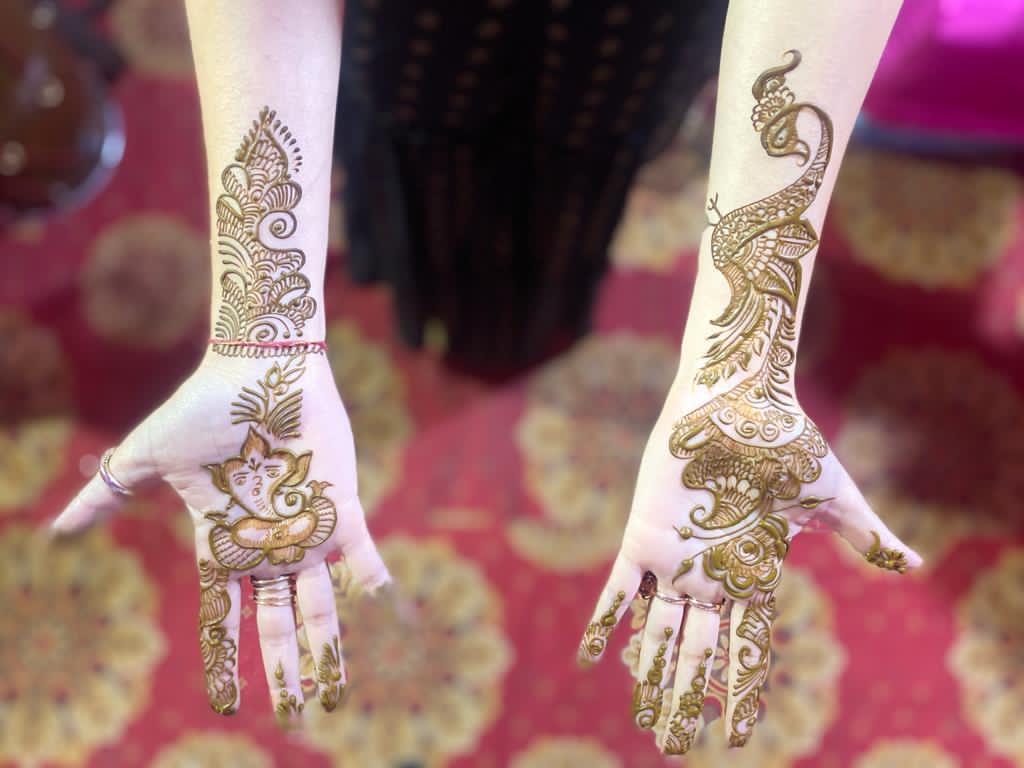
3. Mehndi/Henna. Many do not know this, but the properties of mehndi (referred to as henna in the western world) include cooling and relaxing the body. It is one of the reasons it is applied to brides before their wedding day to bring a sense of calm to the mind and body before such a stress-inducing life event. You can apply mehndi anywhere on the body and many use it as a hair mask for a natural reddish-brown hue along with the cooling sensation directly on the cranium. Mehndi is one of my favorite things in this world, so I take any chance I can get to get my hands covered with it. For those looking to be more subtle, find a good mehndi artist to make small tattoo-like designs wherever you want or buy a cone and play with it on your own!
4. Having an Outlet
One of my favorite philosophies is that you should have 3 hobbies in life: one to keep you in shape, one to make you money, and one to keep you creative. I love this philosophy because it’s about finding useful applications for your passions. Every anxious individual knows there is a lot of pent up energy in anxious moments, and directing that into a hobby or passion as an outlet is a healthy release. Many choose workouts as a combination outlet for physical release and mental redirection to the physical task. This is an extremely effective outlet if you are consistent with it and enjoy it. Journaling is another tried and tested outlet that acts as a safe space to release or work through your thoughts, and the act of writing requires physical engagement as well. Personally, I use dancing and writing as my outlets. I dance as my workout method because it has all the benefits of physical movement with the added benefit of bringing me immense joy! I then also write in a few formats: blogging for intellectual release, journaling to work through my thoughts and inspire myself, and poetry for emotional release. Identify your passions and see how they can work for you.

5. Rationalizing Your Thoughts
This is one of the most effective yet most difficult tactics. It leverages some of the aforementioned methods, but requires the courage and willpower to convince yourself that you do not need to be hindered by the anxious thoughts and reason your way out of the derailment. It starts with breaking down your anxious thoughts one-by-one, understanding where the fear/worry is stemming from, and then analyzing the outcome or worst case scenario of taking or not taking the expected action.
For example, when I’m feeling anxious about opening a message or responding to it, I walk through these thoughts.

Anxious source: Overall my fear is failure because if someone is messaging me, they likely need something and I don’t want to let them down.
Analysis: I then rationalize that 1) not everyone who messages me needs or wants something – they may want to just say hello, and 2) even if someone does need something then all I can do is provide what I do know or a direction for what they need because 3) I can’t possibly have the solution for everyone.
Weighing the Outcome: It’s the third point of analysis that really checks me out of my anxious moment because I’ve convinced myself that if I can’t have the solution for everyone, then the worst thing that will happen is that I won’t have a solution for this individual and they will have to find help elsewhere. On the positive side, if it’s something I can help with, then I would have been able to help, which is something that makes me very happy! Either way, it’s not the end of the world. In scenarios where the message is from a known individual for a mutual need, I also use my why to recognize that I need to engage in order to move forward with my why. This takes courage because I risk my fear for the sake of my why because I’ve convinced myself that the action is in the direction of my life goals, and that’s more important than any potential negative outcome.
Rationalization diffuses the thought and helps heal the anxiety pertaining to certain actions entirely once you get comfortable with that rationalization and fully accept it so it doesn’t trigger you anymore.

Anxiety is hard, but it doesn’t have to control your life. Life is a combination of the cards you’re handed and how you choose to play them. You may have been handed the anxiety card, but how you play that card is entirely up to you. You can let it run its course (and your life), or you can use these tools and/or professional help to manage it so you can live your life on your terms. The choice is yours alone, but know that you’re not playing by yourself. We’re all in this game together, and I’m betting you can play the game just fine.
Doing the needful
Is extremely fearful
A message, a call
Anything at all
That creeping thought
Internally fought
Tensions awry
Just wanting to cry
A hug or embrace
A loving space
Is the only need
To be truly freed
This game of life
Is full of strife
But I am there
In this game to share
Every smile & every tear
You’re not alone, never fear
– Akiti –

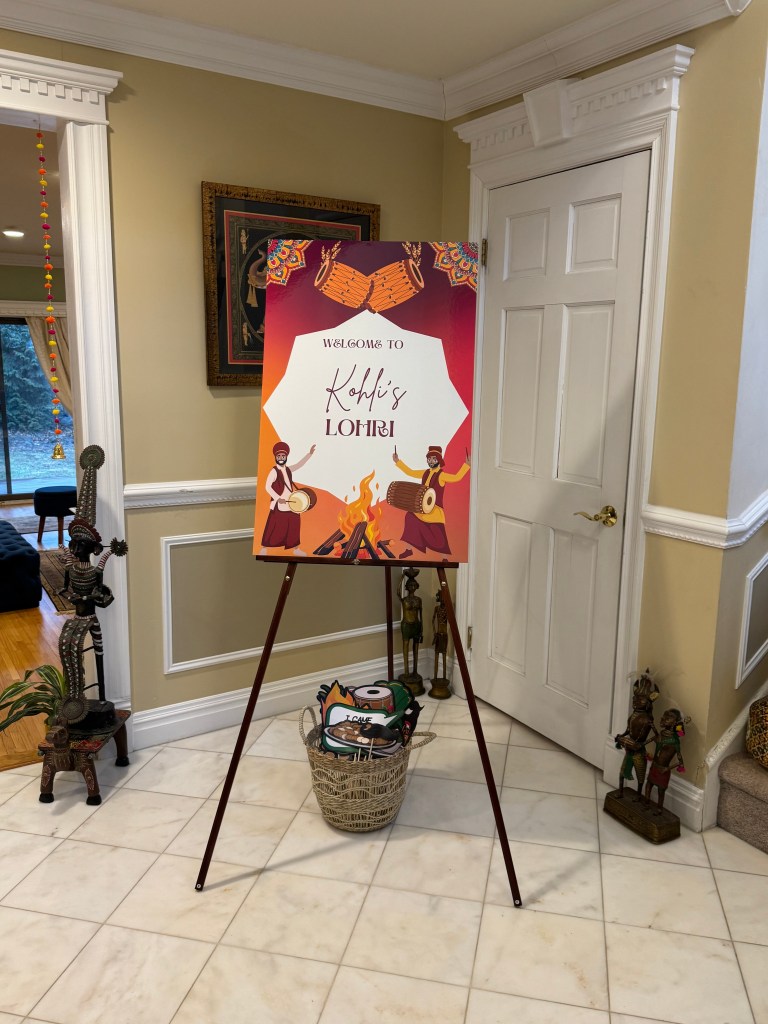
It’s January 13th, the bonfire is blazing, the dhol is playing, and the people are dancing. This is Lohri. Most people have never heard of this festival because it is niche to the North Indian state of Punjab (parts of which are in Pakistan), but also widely celebrated in Haryana, Himachal Pradesh, Jammu & Kashmir, and Delhi. It is the most anticipated festival in Punjab as it celebrates the beginning of the harvest for this agricultural state of India and symbolizes new beginnings & prosperity. The festival is considered to be extra special for newly weds and newborns as an auspicious beginning to their new journey ahead.
Astrologically,
Lohri signifies the end of the winter solstice, meaning the end of the cold winter and, hopefully, the beginning of warmer and longer days. The warmth and light expected to come with this climate is optimal for harvesting, hence the celebration for the beginning of the harvest season.
Spiritually,
Lohri is celebrated by both Hindus and Sikhs and is intended to honor both Surya and Agni, the Sun God and the Fire God respectively, so that the harvest may be blessed.
Traditionally,
Lohri is celebrated with a bonfire which the community will sing & dance around while offering makhana, rewari, gajak, and other items as symbols of warmth, prosperity, and abundance. Punjabi folk music is played with a dhol and boliyan while the community dances in traditional bhangra or giddha. Traditional Punjabi clothes are usually worn and are typically vibrant colors, especially for Lohri, to signify the warmth and light that is being celebrated.
Happy Lohri!
May the festival of Lohri bring
light, laughter, and abundance
to your home!




The hype around AI was that it was going to change how businesses succeeded “and it’ll be unthinkable not to have intelligence integrated into every product and service” (Sam Altman, CEO of OpenAI). The problem with this marketing was that it encouraged every leader in every type of business to rush to get AI into their tech stack in some way or form – regardless of whether it was actually solving anything. After the adoption of AI in businesses has doubled in 2025, we’re seeing reports from companies like McKinsey showing only 39% of companies are reporting EBIT value. With these kinds of results, it is clear that just onboarding AI into your business is not enough. You need to know what makes AI effective in your business and how to implement it to see true ROI.
What Causes the Lack of ROI
- Using AI Only for Task Efficiency: improving employee task completion rates without business benefits tied to the top or bottom line.
- No Clear Goal Defined: implementing AI for the sake of implementing AI without a clear goal for the use of AI tied to a problem or specific revenue or operating metric.
- Poor Implementation: onboarding AI solutions, especially Agentic AI, without cleaning up data for input or providing business context for valuable outputs. Garbage in, garbage out.
- Assumed Benefits Instead of EBIT Value Association: expecting benefits outlined by AI providers by just implementing cookie-cutter solutions instead of choosing solutions & implementing with EBIT value related metrics.
3 Ways to Get ROI from AI
The reality is that AI is not cost-efficient today because of the high cost of AI processing. But if you know how to implement it correctly and size the cost to the benefit accordingly, it’s worth it every time.
1. Understand the Problem
You need to know the specific problem you’re trying to solve and WHY an AI solution is applicable to solve it effectively. Not everything requires AI. Sometimes AI can add unnecessary noise to your tech stack, especially if the direction is not clear from leaders and aligned to the working level knowledge of how processes actually work.
2. Hire the Right Employees
Not everyone can implement AI because not everyone has the skillset required to implement it properly. You need people who know how to translate business context AND customer experience into technical requirements, while also understanding the data structures required for the each type of AI solution. Not everyone knows how to do this and it is the baseline requirement for AI algorithm inputs and prompts.
2. Match Your ROI to the EBIT Goal
Measure your success with an AI solution against the problem being solved with a direct to tie to EBIT value instead of expecting revenue to magically appear from AI implementation. Your KPIs need to show the extent to which the problem is solved AND how the problem being solved adds EBIT value – whether it’s direct topline value through innovation or bottomline savings through organizational efficiencies achieved.

Implement AI effectively for the results you desire to build the wealth your business deserves.
“If you have a vision, a plan and the conviction, you should follow it and success will come your way”
Ritu Kumar
Renowned Indian Fashion Designer
A luncheon for children calls for confident, striking, and powerful – exactly what tuxedos are made of. And this time for women, and with pockets!
The Event
The Valley Hospital Auxiliary Boutique & Luncheon for the Saddle River Branch is an annual event raising funds for the Butterflies program for critical ill children to support and enhance patient care and comfort in the treatment of cancer and pregnancy-induced hypertension. The Auxiliary has a pledge of $1.6 million towards this wonderful cause and hosts this event with luxury vendors and auction items to bring awareness to the cause while raising funds.
As the Treasurer for this Auxiliary, I felt it was necessary to dress the part of the financial manager in a way that exudes the confidence and prowess for the role while still being comfortable enough to help with the event.
The Look
My vision for my outfit was sleek, sexy, yet…luncheon-y! When one thinks of a luncheon, you assume business fancy with pearls and pastel shades. But for a holiday luncheon, the rules are a little different. All holiday colors are suddenly on the table and the there’s no harm in a little glitz and glam!
After sifting through my closet, I decided to go with an all-black tailored tuxedo jumpsuit by renowned Indian Fashion Designer, Ritu Kumar. It fit the vision perfectly, and the accessories really made it POP!
What I love about this tux is that it’s tapered just the right amount to create a silhouette of my figure while still exuding that business professional feel. The deep cut of the front is highlighted by the satin lapels, leaving it just sexy enough without being revealing for this type of event.


The Accessories
Since the tuxedo was all black, I wanted to bring a bit of glam back to the outfit so I paired it with diamond, gold, & black jewelry, Swarovski studded heels, a bejeweled headband, and a black purse.
My jewelry included statement black and gold earrings with mother of pearl droplets from Van Cleef & Arpels, and a diamond & gold necklace, rings and bracelets from Veeni Jewels. For such a special event, rather than wear my black studded Apple Watch, I went with my black & rose gold Versace watch to match the outfit, but also remember my step-father, my Appa, as he loved children so very much.
I wanted my shoes and my head to sparkle to offset the black tux. Therefore my heels were a beautiful black satin with Swarovski studded straps and bow from Steve Madden that went seamlessly with the tux. The shine from the shoes truly elevated the look overall, and when paired with my similarly bejeweled headband, it was just enough sparkle without taking over the look.
As a co-host of the event, one does not really need their purse or coat with them, but I did pair the look with my favorite Burberry accessories: my Burberry black leather purse with signature print on the sides and my Burberry black cashmere jacket to fare this freezing winter we have entered.


“Whatever happened, happened for the good,
whatever is happening, is happening for the good,
whatever will happen, will also happen for the good.
You need not have any regards from the past.
Do not worry for the future.
Live in the present.”
Krishnji, Bhagavad Gita
Our lives are a compilation of every moment that brought us to today. Knowing that, it should be apparent to all of us that every moment is precious, especially as we’re living it. Yet most, if not all, of us forget this and get caught up in the tragedies of our past and our fear of the unknown that is the future.
But what if we changed that?
What if we decided to live with and for what we have today?
What if we actually enjoyed the moments we have now and made the best decisions based on what we know right now, rather than worrying about what we should have known before or could know tomorrow?
The practical application of this concept can seem difficult, but is it really so, or is it just our way of remaining in the confines of our fears and self-judgement? As an over-thinker myself, I have found it difficult to truly let go of past or future tension, but in the moments that I’m able to catch myself and remember that the present is the most important, I find the peace I’m constantly striving for by trying to deal with all the tension. And that’s the trick!
Focus on what is right in front of you.
The moment you find a way to focus on what you need to do now, in this moment, you’ll start to see clarity in the moments surrounding it. The reason being that your mind has cleared itself of all the distractions that come with trying to catch up with the thoughts of yesterday or preparing for what’s to come. In that moment, your mind is honed in on the task at hand and how to perform that to its best abilities.
But what of the many things on your to-do list you ask? Well, that’s the beauty of having a list. If you know you need to do Actions A, B, and C today, you would also know that each Action will take X amount of time. Therefore, you can set your focus on Action A for its time, and then when that time is up, you proceed to Action B for its allotted time, and so on and so forth. At first, especially if you’re an over thinker, you’ll find you are constantly checking if you have enough time to complete Action A. Know that this is okay, and it will take time for the method to sink in. Eventually, you’ll notice that your speed in performing each action will quicken because your mind is no longer distracted and delaying its process by focusing on everything else.
Not only does it help you complete your day-to-day tasks, but this method or perspective also helps reduce the tension we give ourselves by worrying about everything – past, present, and future – all at once! Just focus on what is the next action you need to take, and do that, then move to the next and the next – just like walking through life one step at a time.
Most of all, this method of thinking forces us to enjoy each moment for what it brings us today. It forces us to remember that what we have is right now in this moment because the next one isn’t promised to anyone. We need to remember to enjoy these moments, enjoy the things we have, enjoy the people that are ours today, because tomorrow it could all change.
Do that thing you’d said you do tomorrow.
Spend time with the people you love today.
And be spontaneous when life gives you a chance to!
Take it from Krishnji – there is solace in knowing that the past happened for a reason, what’s happening is for a reason, and what will happen also has a reason, and that they’re all good (even if it doesn’t seem that way!). Just live in the moment, and move moment to moment, and there you’ll find peace in action.
Karma hai Bhagvan
Yeh kehtein hain log aam
Par asal mein hum kya karein
Jab dukh hota hai baar baar
Yeh duniya chalti rehti hai
Log jeetein hain khushaal
Yeh kaise jeetein hain
Zara humhe bhi batao, mere yaar
Krishnji ne bola phir
Jo hota hai, wo sahi
Jo hona hoga, wo bhi sahi
Toh yaar aaj khulke ji!
Aaj khulke jeeke dekha
Ab sach pata chalgeya
Zindagi har pal mein hai
Aur har pal mein hi hai mazaa!
Translation (adjusted for meaning):
Action is God
This is what people say
But practically what should we do
When pain always comes our way
The world keeps moving
People live happily
How is it possible
Friend, please tell me
Krishnji has said
What happens is good
What will happen is also good
So, Friend, live today as you should!
Today I tried to live fully
And now I see the truth
Life is in every moment
And in every moment life is good!
– Akiti –

Today was bad. I didn’t want to move. I didn’t want to open my eyes. I didn’t want to see, hear, or feel anything. I couldn’t, even if I wanted to.
I was empty.
I call it my ‘Blah Mode’ – the status of my existence where I’m here, I exist, but there are no emotions or desires; a state of existing while not feeling that existence at all. In this mode, I can observe the world around me, move through the motions of my day, and yet have no reaction to it. I’ll be cordial because I’m supposed to, I’ll interact in the manner that is expected, and I’ll take the actions only absolutely necessary to continue living that my body requires. But while doing all of that, I am fully aware that it’s fake and forced, and yet I can’t do anything about it.
It’s like watching a movie where you’re the main character, or more accurately, experiencing a dream while knowing full well that you’re not actually there. The reality all the while is that you are there. It is real. It is not a movie or a dream. It just feels like one.
If someone makes a joke, I smile and laugh knowing full well that I don’t feel either. I know it’s funny, I can acknowledge that, but my body doesn’t feel like reacting. So I smile, to show my acknowledgment, and my body laughs as a reaction to my brain’s association with something being funny requiring the action of laughing. But inside all I can think is “Why am I laughing? Or more importantly, how am I laughing when I don’t feel it? How am I even able to produce that physical reaction without feeling anything remotely close to it inside?”
I’ve previously used different tools to get out of my ‘blah mode’ but today nothing works and I don’t know how to move out of it. Nothing seems to break it and I don’t feel like exploring new methods. When I attempt to go through the motions of my day, I can’t help but express my wanton state because I don’t want others to feel bad that I’m so dull – not that it’s anything to feel bad about, but I’d rather folks know that it’s not them, it’s my own shenanigans that I’m dealing with.
“If someone makes a joke, I smile and laugh knowing full well that I don’t feel either. I know it’s funny, I can acknowledge that, but my body doesn’t feel like reacting.”
My friends checked in to see if there’s anything they can do, not that there ever really is. It’s taken years of building up the courage to tell them that I appreciate the concern, but there’s nothing anyone else can do – this is inside me and I have to find my path out of it.
At the core of it, I also want to be alone and do nothing. That’s the only thing I want actually. It’s the only thing that makes sense. And so that’s what I did. I’ve isolated myself again. It feels right and yet it feels wrong. But most of all, it still feels … blah.
This was written on one of my most downtrodden days. I am feeling much better now, but I wanted to share the exact feelings and thoughts that run through one’s mind when they’re in a depressive state. It’s lonely, and as much as others want to help pull someone out, sometimes the individual just needs to know you’re there and that you understand they need to go through what they’re going through.
If you or a loved one are experiencing depression, please know that people do care and want you to be okay. If you don’t have anyone to talk to or relate to, you can always use this space to reach out to me or my community. There’s always the option of professional and/or spiritual assistance, as well, so choose whichever suits you. I’ve also linked some resources you can reach out to if you don’t know what to do or who to talk to.
Resources:
Understanding Your Depression:
National Alliance on Mental Illness
Getting Help:
National Helpline or call 1-800-662-HELP (4357)
Today was bad.
But I survived and got to be alive.
Tomorrow is another day for me to try.
– Akiti –

“Jobs fill your pockets,
Adventures fill your soul.”
Jaime Lyn Beatty
We always see celebrities boarding their jets in the most fabulous of outfits – departing looking stylish, and arriving looking refreshed. But how do they do it?! I can tell you that travel ease is not just for the jet-setters – you can achieve it, too!
Traveling itself is usually considered very cumbersome and uncomfortable for us economy travelers, and especially now after being cooped up with our spacious beds and comfy couches. While that is a hard combination to overcome, I have some tips for you that will make it comfortably easy to travel while still looking fab-u-lous! The key is to find outfits that suit your comfort needs, make the travel process easy, AND still make you stand out as your fab self.
How to Achieve the Airport Look
1. Matching Sets or Rompers!
When a look flows well the way matching or coordinated ones do, it automatically gives a clean, organized vibe. This is also an easy way to not have to think about your look and just throw on the set and jet out door! Separate sets are easier to manage in airplane bathrooms, but I love the freedom and ease of wearing a romper – at the end of the day, it’s what suits you.
2. Loose or Stretchy Fit
Finding a comfortable position on a flight can be a pain, so you want to make sure you’re able to move comfortably in your fit. If you like loose, then flared pants, track pants, or maxis are great options for mobility. If you like fitted, then activewear is perfect for that fitted feel with the stretchy and light fabric that lets you move.
3. Comfortable fabrics
You don’t need to be in tight jeans and pinchingly-fitted tops to look cute! Pick cottons, jegging material (blended jean/cotton/polyesters), satin, or georgette. These are light, but still provide coverage. You want to make sure the outfit is comfortable both in mobility but also temperature since that fluctuates from your time in their airport to the altitude of the plane. (Always carry a jacket, cardigan, or shawl just in case!)
4. Slips ons
Airport security rules vary so much, but usually you have to remove your shoes at some point (or you may just want to take them off on the plane!). Wedged/thick-heeled sliders or slip ons are best because they provide the support your foot needs for all the walking, while still being easy to maneuver at security. If you prefer pencil heels, make sure they have good grips for the slippery airport floors and don’t pinch anywhere after walking for too long.
5. Water & Spritz!
Whether you wear makeup or not is entirely a preference, but the most important thing to do is to hydrate constantly at the airport and on the plane. The dry air and altitude strip your skin and cause that grungy feeling. When you’re close to arriving, keep a refreshing spray (approved size & materials of course) or use water to sprite your face to rehydrate the skin and bring back your glow! If you wear makeup, make sure it’s long-wear, waterproof, and hydrating. This will prevent it from clumping smudging and drying you out.